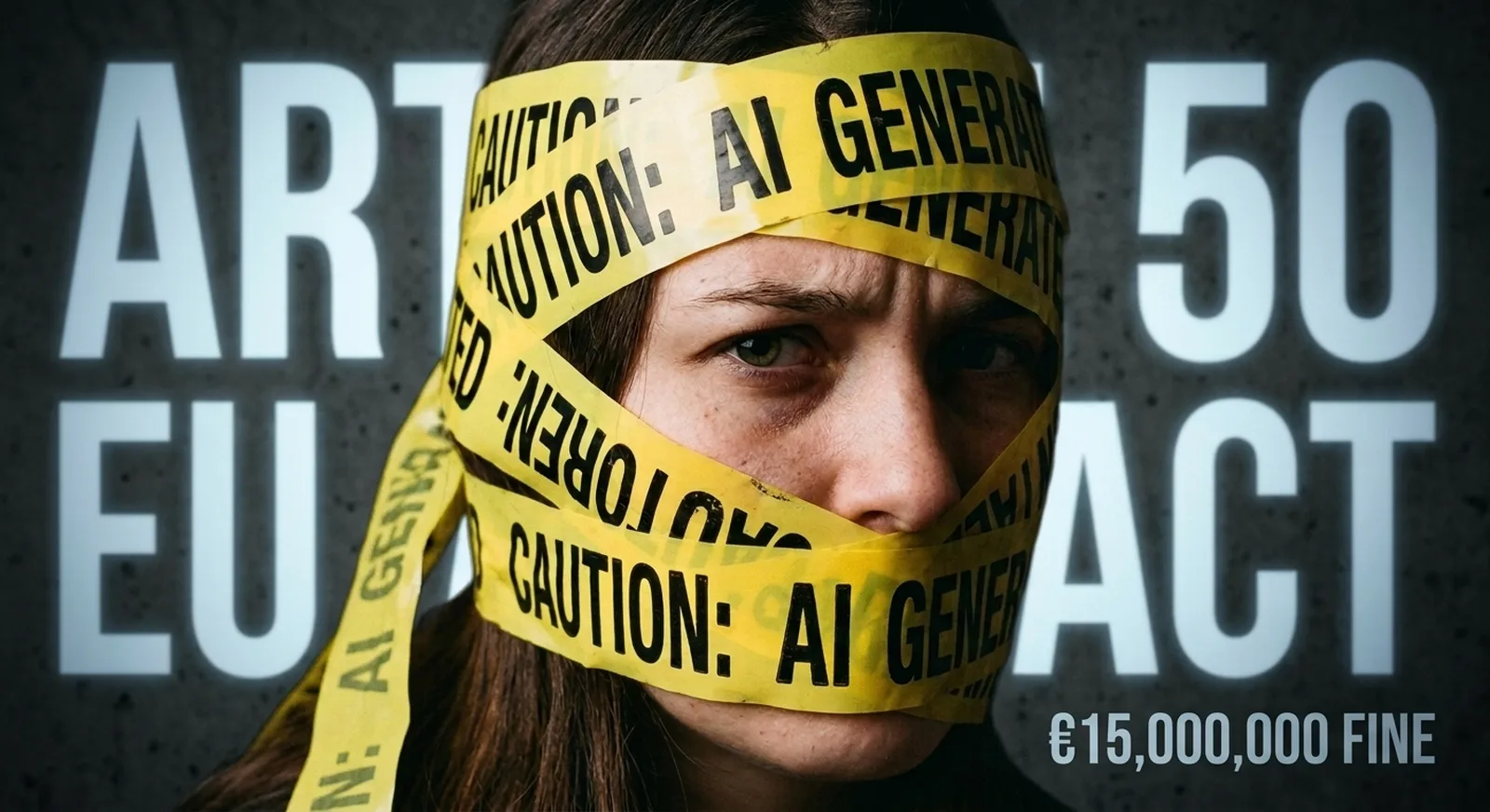
Your brand is using AI images. Here is what can go wrong — and exactly what to do about it.
A marketing director approves the campaign. The visuals look stunning. The media plan is locked. And then, right before sign-off, someone from legal asks the one question that exposes every AI images legal risks problem at once: “These hero shots — are any of them AI?”
Consequently, silence fills the room. The agency looks at the freelancer. The freelancer looks at the floor. Nobody quite remembers.
That pause is the whole problem with AI images legal risks in 2026. Brands have been generating visuals for two years now — fast, cheap, beautiful. However, the legal ground beneath those images has shifted dramatically. And most teams haven’t caught up.
This article is not a legal explainer. It is a practical roadmap. If you are a brand manager, an agency lead, or a freelancer producing AI visuals for commercial use, these are the concrete steps you can take today to protect yourself. Simple language, real actions, no jargon.
Three AI images legal risks you probably haven’t thought about
Most brands think the risk with AI images is that they “look a bit off.” Wrong. The real AI images legal risks are structural — and they hit your business in places you don’t expect.
Problem one: you can’t own it. Under current U.S. copyright law, a fully AI-generated image with no substantial human authorship cannot be copyrighted. In March 2026, the Supreme Court declined to change that view. In other words, your stunning hero visual may legally belong to nobody. Moreover, a competitor can run a near-identical image next week, and you have no leg to stand on. As a result, the “free” AI image actually costs you your exclusivity.
Problem two: someone else already owns what’s inside it. The models you use learned from millions of copyrighted images. According to BakerHostetler’s AI litigation tracker, there are now dozens of active copyright cases against AI providers — and increasingly, the brands publishing the outputs are being named too. For example, Anthropic settled a $1.5 billion authors’ class action. Similarly, Getty sued Stability AI, and Disney and Marvel filed against Midjourney. The message is clear: training-data risk flows downstream to anyone who publishes the output.
Problem three: real faces show up uninvited. AI-generated faces drift toward real people the model has seen during training. In practice, if your campaign accidentally features a face that resembles a celebrity — even roughly — expect a letter from their representation. Ultimately, intent doesn’t matter. The settlement number does.
August 2, 2026: the deadline that changes everything
From August 2, 2026, Article 50 of the EU AI Act becomes enforceable. Here is what it means in plain English for anyone dealing with AI images legal risks.
If you publish AI-generated content in the EU market — product heroes, lifestyle imagery, social media visuals, anything — you must clearly tell your audience it is AI-generated. In practice, that means a visible label on the image. Furthermore, AI tool providers must embed machine-readable watermarks at the point of generation, and you must keep those markers intact. Penalties reach €15 million or 3% of global annual turnover, whichever is higher.
Meanwhile, New York’s new disclosure law takes effect in June 2026 with penalties of $1,000 to $5,000 per violation. And platforms like Meta, TikTok, and YouTube already require their own AI content disclosures. In other words, the walls are closing in from every direction.
“The first question now isn’t who made it. It’s who owns it — and whether anyone can stop a competitor from using the same prompt tomorrow.”
In-house counsel, European FMCG group
Moreover, here is the part most teams miss: these rules apply retroactively. If your AI-generated campaign is still running on August 2, you need to either label it, replace it, or pull it. No grace period.
What brands got wrong — and what went viral
The backlash is already happening, and it is brutal. In December 2025, McDonald’s Netherlands released a holiday commercial made with generative AI. According to DesignRush’s roundup of AI advertising failures, it was pulled within days after comments like “ruined my Christmas spirit” flooded social media. Consequently, the brand learned the hard way that consumers don’t just dislike undisclosed AI — they punish it.
Vogue’s August 2025 issue featured Guess ads with AI-generated models named “Vivienne” and “Anastasia” — no disclosure, no real humans. As a result, the backlash was immediate. Furthermore, early 2026 saw brands like Aerie and Equinox actively advertising that their campaigns are human-made, turning the AI images legal risks into a competitive advantage for anyone not using AI. As The Conversation reported, a backlash against AI imagery in advertising has officially begun.
The pattern across every viral incident is the same: a brand uses AI without telling anyone, gets caught, and the resulting PR damage costs far more than the AI saved in production. Above all, the lesson is simple — transparency is cheaper than a crisis.
Five things you can do today to reduce AI images legal risks
Here is the practical part. In practice, these five actions take a few hours total, and they cover the most urgent AI images legal risks for any brand or agency.
Action one: audit every live asset. Go through every campaign currently running — website, social, print, OOH, video. For each visual, answer one question: was AI involved in creating this image? If yes, flag it. If nobody knows, flag it anyway. After all, you cannot fix what you haven’t mapped.
Action two: decide — label, replace, or pull. For each flagged asset, pick one of three options. Label it with a visible “AI-generated” disclosure — a small badge in the corner works for digital assets. Replace it with a CGI or photography version. Or pull it from rotation entirely. In most cases, the cheapest option for teams is labelling. The safest option for hero assets is replacing them with a controlled CGI build where you own every pixel.
Action three: update your briefing template. From today, every creative brief should include three fields: which AI tools were used, where in the workflow AI was involved (exploration, generation, finishing), and who takes editorial responsibility for the final asset. Ultimately, this documentation is what separates a defensible workflow from a liability.
Protect your contracts and build a defensible workflow
Action four: check your contracts. Does your AI tool’s enterprise plan include IP indemnity? OpenAI, Adobe, and Microsoft offer this — but only on higher-tier plans and only if you used the tool within its guardrails. Furthermore, call your professional indemnity broker and ask whether AI-generated outputs are covered. Most insurers wrote their policies before generative tools existed. Get the answer in writing before the next renewal.
Action five: build the editorial layer. The EU AI Act’s Article 50(4) contains a crucial exemption. If a human reviews, edits, and takes editorial responsibility for an AI-generated image — and substantially changes it — the automatic labelling requirement does not apply the same way. Consequently, this is where professional studios add the most value. For example, an AI mood board that gets rebuilt in CGI, re-lit, re-composited, and signed off by a human creative director is a fundamentally different legal object from a raw AI output dropped into a media plan. Our creative retouching service is built around exactly this editorial-review workflow.
When is an image “AI-generated” versus “AI-assisted”?
This is the question every creative team is asking, and the answer matters enormously for managing AI images legal risks. The EU AI Act doesn’t give a percentage. Instead, it asks: did the human change the meaning, structure, or substance of the image?
For instance, auto-cropping, colour grading, or removing a glitchy hand — those are cosmetic fixes. The image is still AI-generated. The disclosure rule still applies. However, the threshold is met when the human work changes what the image fundamentally is. In contrast, rebuilding the product in CGI on top of an AI mood layer. Replacing the lighting setup with a custom HDRI. Compositing in real photography for the hero subject. As a rough test: if a forensic look at the final asset shows that the AI’s output is no longer the dominant creative decision, you are out of “AI-generated” and into “AI-assisted” — which is a legally different category.
“AI got us 60% of the way there. The studio got us the last 40 — and the documentation that lets us actually publish.”
Marketing director, beverage brand
Above all, document every step as you go. The exemption only protects you if you can prove the editorial layer existed. Therefore, save the prompt history, the intermediate versions, the CGI scene files, the retouching layers. That paper trail is your insurance policy.
The smartest way to handle AI images legal risks in 2026
The brands that will navigate AI images legal risks successfully in 2026 are not the ones avoiding AI entirely. Instead, they are the ones treating it like any other production tool — with contracts, documentation, and professional oversight. AI for exploration and mood boarding. CGI for hero accuracy on the assets that matter most. A creative retouching layer that turns a legally fragile AI output into a defensible, ownable campaign asset.
We argued the same point in our breakdown of AI versus CGI for advertising — the best campaigns in 2026 mix both technologies, each in the right place. And as we explored in whether retouchers are dead, the editorial layer is the part AI hasn’t replaced. Conveniently, it is now the part the regulator is rewarding.
Ultimately, the conversation isn’t about whether to use AI. It is about using it in a way that protects your brand, your budget, and your reputation. If your next campaign involves AI imagery and you want a second pair of eyes on the workflow, the disclosure plan, or the question of which assets to rebuild — reach out whenever you are ready. Our commercial AI key visual service is built for exactly this conversation.
Lauktien Studio is a Berlin-based CGI, AI and creative retouching studio working with international brands and agencies on commercial AI key visuals, 3D product visualization and campaign retouching. Nothing in this article is legal advice. Brands should consult qualified counsel on EU AI Act compliance and IP matters specific to their campaigns.

Rüdiger Lauktien
Married to his wonderful wife, father of two. Drummer, dreamer, pipe-smoker, photographer, adventurer and a man of faith. More than 15 years of experience in the creative industry. Awarded Digital Artist and Art Director.